
AI-Powered Customer Segmentation
How to increase ROI and customer experience utilizing the power of AI in marketing segmentation
2/27/20247 min read
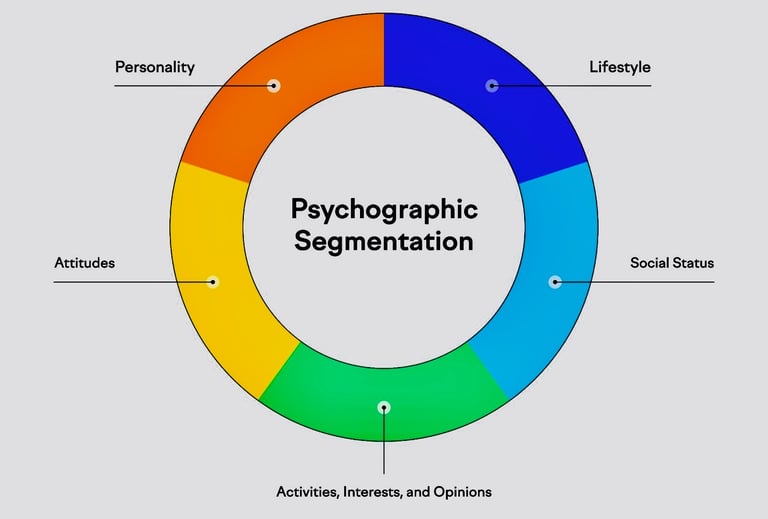
Picture this: You're planning a party, and you want to ensure every guest has an unforgettable experience. But here's the catch – not everyone enjoys the same music, food, or activities. Just like in marketing, where one-size-fits-all approaches fall short of capturing the diverse preferences and needs of your audience.
Customer segmentation is the secret sauce that transforms marketing from a shotgun approach to a precision-targeted strategy. By dividing your audience into distinct groups based on shared characteristics or behaviors, you can tailor your messaging and offerings to resonate with each segment on a deeper level.
But here's where it gets exciting: Enter artificial intelligence (AI), the game-changer poised to revolutionize the way we approach segmentation. Imagine having a virtual party planner who not only identifies the unique tastes and preferences of each guest but also anticipates their needs before they even realize them.
In this blog post, we're diving into the world of customer segmentation and teasing the transformative potential of AI in refining these strategies for more personalized marketing. Get ready to unlock the power of AI and take your marketing efforts to the next level. It's time to throw the party of a lifetime – for every guest on your list.
Traditional Customer Segmentation Methods:
In the world of marketing, customer segmentation has long been the cornerstone of effective strategy. Traditionally, businesses have relied on demographic data, psychographic profiles, and behavioral patterns to categorize their audience into distinct segments. While these methods have served their purpose, they often fall short in capturing the dynamic nature of consumer preferences and behaviors.
Think about it: demographics like age and gender can only tell you so much about a person's preferences. Psychographic profiles might provide insights into their values and lifestyle, but they still miss the mark when it comes to predicting purchasing behavior in real-time. And behavioral segmentation, while valuable, can be limited by the data available and the granularity of the analysis.
This is where AI steps in to shake things up. AI algorithms have the power to analyze vast amounts of data with lightning speed, uncovering hidden patterns and nuances that traditional methods might miss. By incorporating AI into customer segmentation strategies, businesses can move beyond static segments and embrace a more dynamic, personalized approach to marketing.
In the next sections, we'll explore how AI algorithms enhance customer segmentation strategies, leading to more targeted and personalized marketing campaigns. Get ready to discover the future of segmentation – where every customer is treated like a VIP guest at your party.
AI in Customer Segmentation:
Welcome to the era of AI-driven customer segmentation – where the possibilities are as limitless as the data itself. Unlike traditional segmentation methods that rely on manual analysis and predefined rules, AI algorithms have the remarkable ability to sift through massive datasets in real-time, uncovering hidden insights and trends that would otherwise remain elusive.
Imagine having an army of data scientists at your disposal, tirelessly combing through mountains of data to identify micro-segments and patterns within your audience. That's the power of AI in customer segmentation.
AI-driven segmentation goes beyond mere demographics and surface-level characteristics. It delves deep into the nuances of consumer behavior, identifying subtle signals and preferences that shape purchasing decisions. Whether it's uncovering niche interests, predicting future buying behavior, or identifying high-value segments, AI enables marketers to paint a richer, more nuanced portrait of their audience.
But perhaps the most compelling aspect of AI-driven segmentation is its adaptability. Traditional segmentation methods often rely on static segments that are updated infrequently and lack the agility to respond to changes in consumer behavior. AI, on the other hand, thrives on dynamism – constantly analyzing new data inputs, refining segmentation models, and adapting strategies in real-time to ensure relevance and effectiveness.
In the next sections, we'll delve deeper into the specific ways AI enhances customer segmentation strategies, from personalization at scale to predictive modeling and beyond. Get ready to witness the transformational power of AI in revolutionizing the way we understand and engage with our audience. The future of segmentation starts here.
Personalization at Scale:
One of the most exciting aspects of AI-powered customer segmentation is its ability to unlock the potential of personalization at scale. Traditional segmentation methods often struggle to deliver truly personalized experiences, as they rely on broad categorizations that fail to capture the individual preferences and behaviors of each customer.
AI changes the game by enabling marketers to tailor their messaging and offerings to the unique needs and preferences of each segment, no matter how niche or specific. By analyzing vast amounts of data, including past interactions, browsing behavior, purchase history, and even social media activity, AI algorithms can identify patterns and trends that allow for hyper-personalized targeting.
Imagine receiving a marketing message that feels like it was crafted just for you – addressing your specific interests, addressing your pain points, and offering solutions tailored to your needs. That's the power of AI-driven personalization.
Whether it's recommending products based on past purchases, delivering targeted content that aligns with a customer's interests, or customizing offers and promotions to match their preferences, AI enables marketers to create experiences that resonate on a deeply personal level.
But personalization at scale isn't just about making customers feel special – it's also about driving tangible results for your business. Studies have shown that personalized marketing campaigns consistently outperform generic ones, leading to higher conversion rates, increased engagement, and greater customer satisfaction.
In the next sections, we'll explore real-world examples of businesses leveraging AI for personalized marketing campaigns and dive deeper into the strategies and techniques that drive success. Get ready to unlock the full potential of personalization and take your marketing efforts to new heights.
Predictive Customer Segmentation:
In the dynamic world of marketing, being able to anticipate customer needs and behaviors before they happen is the ultimate competitive advantage. This is where predictive customer segmentation powered by AI comes into play, revolutionizing the way businesses understand and engage with their audience.
Traditional segmentation methods are often reactive, relying on historical data to categorize customers based on past interactions and behaviors. While valuable, this approach can be limiting, as it fails to account for shifts in consumer preferences or emerging trends.
AI-driven predictive segmentation takes a proactive approach, leveraging machine learning algorithms to analyze historical data and identify patterns that signal future behaviors. By identifying predictive indicators such as browsing patterns, engagement levels, and purchase history, AI algorithms can forecast which segments are most likely to convert, churn, or engage with specific marketing initiatives.
Imagine being able to identify potential high-value customers before they even make a purchase, or predict which segments are most likely to respond positively to a new product launch. With predictive customer segmentation, businesses can allocate resources more effectively, target their marketing efforts with laser-like precision, and stay one step ahead of the competition.
But predictive segmentation isn't just about improving marketing efficiency – it's also about enhancing the customer experience. By anticipating customer needs and preferences, businesses can deliver more relevant and timely messages, increasing engagement and fostering loyalty.
In the next sections, we'll explore real-world examples of businesses leveraging predictive customer segmentation to drive marketing success and dive deeper into the strategies and techniques that underpin this approach. Get ready to unlock the power of predictive analytics and take your marketing efforts to the next level.
Case Studies and Examples:
Let's take a closer look at how real-world businesses are harnessing the power of AI-driven customer segmentation to drive tangible results and transform their marketing strategies:
Amazon: The e-commerce giant is a prime example of how AI-powered segmentation drives personalized recommendations. By analyzing past purchase history, browsing behavior, and demographic data, Amazon's recommendation engine delivers personalized product suggestions to each user, driving sales and increasing customer satisfaction.
Netflix: The streaming service leverages AI algorithms to segment users based on their viewing history and preferences. By analyzing viewing patterns and content interactions, Netflix recommends personalized recommendations, creating a tailored viewing experience for each user and increasing engagement.
Spotify: Spotify uses AI to segment users based on their music preferences and listening habits. By analyzing listening history, playlist creations, and genre preferences, Spotify delivers personalized playlists and recommendations to each user, enhancing the listening experience and driving user engagement.
Airbnb: The hospitality platform uses AI-powered segmentation to personalize search results and recommendations for travelers. By analyzing past bookings, search history, and user preferences, Airbnb recommends personalized listings and experiences, increasing booking conversions and user satisfaction.
These examples illustrate the transformative impact of AI-driven customer segmentation on marketing success. By leveraging AI algorithms to analyze data and identify patterns, businesses can deliver targeted, personalized experiences that resonate with their audience and drive tangible results. In the next sections, we'll explore the strategies and techniques behind these success stories, providing insights into how you can apply AI-driven segmentation to your own marketing efforts.
Implementing AI-Powered Customer Segmentation:
Now that we've explored the benefits and real-world examples of AI-driven customer segmentation, let's discuss how you can implement these strategies in your own marketing efforts.
Data Collection and Integration: Start by gathering relevant data from various sources, including CRM systems, website analytics, social media platforms, and customer feedback. Ensure that your data is clean, organized, and integrated to provide a comprehensive view of your audience.
Identify Segmentation Criteria: Determine the criteria you'll use to segment your audience, such as demographics, behavior, psychographics, or purchase history. Consider both traditional segmentation variables and more advanced indicators that AI algorithms can analyze.
Choose the Right AI Tools and Platforms: Research and select AI-powered tools and platforms that align with your business goals and objectives. Look for solutions that offer robust segmentation capabilities, predictive analytics, and integrations with your existing systems.
Train AI Models and Algorithms: Train AI models and algorithms using historical data to identify patterns and trends within your audience. Leverage machine learning techniques to continuously refine your segmentation models and adapt to changing customer behaviors.
Test and Iterate: Implement your segmentation strategies in small-scale tests or pilot programs to gauge effectiveness and identify areas for improvement. Use A/B testing and experimentation to refine your approaches and optimize segmentation models over time.
Monitor Performance and Adjust Accordingly: Monitor key performance indicators (KPIs) to evaluate the effectiveness of your segmentation strategies and measure their impact on marketing outcomes. Adjust your segmentation models and strategies based on performance data and feedback from your audience.
By following these steps and embracing AI-powered customer segmentation, you can unlock new opportunities for personalization, targeting, and engagement in your marketing campaigns. Stay agile, experiment with different approaches, and leverage the power of AI to drive meaningful results for your business.

Subscribe To Our Newsletter

